Showing posts with label 1809. Show all posts

Sunday, May 26, 2013

Prince George's County Business Makes News in New York in 1809

               In proof of the attention of country gentlemen to the improvements of their breed of Sheep, we learn that two young rams were shorn at Northampton, the seat of Osborne Sprigg, Esq. [1] of Prince George's Co. a few days since whose fleeces averged [sic] nine & a half pounds and whose carcases [sic] 186 lbs. each.  At the same time and place the fleeces of six ewes, with twin lambs, averaged eight and a quarter pounds.  The fleece of one of the ewes weighed 12lbs.; the whole of the wool being of a remarkable fine fiber and length of staple. [2]


[1] Reporter names the plantation as the seat of Osborne Sprigg whose son, Governor Samuel Sprigg, was most likely responsible for the 1809 news. Samuel Sprigg (c.1783– April 21, 1855) served as the 17th Governor of the state of Maryland in the United States from 1819 to 1822.

"For nearly three centuries Northampton was a tobacco plantation which also produced other crops. Today the physical remains of the plantation include the ruins of the manor house, its outbuildings and roads, and the remains of two slave quarters. The latter are the focus of current archaeological excavations and historical research. Excavations continue at the frame dwelling, while the foundation and partial walls of the brick quarters have been reconstructed.

Historians and archaeologists are working together to reconstruct the lives of the many slaves and tenant farmers who lived at Northampton Plantation. Detailed information about the life of one slave, Elizabeth Hawkins, was obtained from descendants who live in the area and are active participants in the research and excavations relating to this site.

Northampton is located at the Northlake residential development in Lake Arbor, Maryland,in a community park."  - The Maryland-National Capital Park and Planning Commission
Department of Parks and Recreation, Prince George's County. http://www.pgparks.com/places/eleganthistoric/northampton_intro.html

[2] The Public Advertiser; Date: 05-25-1809; Volume: III; Issue: 744; Page: [2]; Location: New York, New York.
Transcribed by John Peter Thompson, May 26, 2013.

Friday, May 24, 2013

Edward Suit of Bladensburg: 1809 - 1850


Edward Suit of Bladensburg

Edward Suit lived in Bladensburg from circa 1820 until his death in 1850; the recorded activities of Suit and his family offer some interesting details about life in Bladensburg in the early 19th century.  Born in 1788 and married in 1809 to Catharine Tolbert/Talbert, Suit served in the Maryland Militia in the War of 1812, in Captain James Veitch’s Company of Infantry.  After the war, Suite farmed land that adjoined the town of Bladensburg on the east - several parcels of the large tract, Columbia, that had been amassed by the Lowndes’ family in the late 18th century.  He also purchased several lots in the town of Bladensburg, including Lots  #21, and #22, and it was in his house in town that he died in August, 1850. [1]

Archival records give us tantalizing bits of information about Edward Suit’s activities in the 1840s.  On 7 March 1844, Suit purchased all of the “goods, wares and merchandise” in the store operated by Joshua Selby in the village of Bladensburg, as well as all of Selby’s household furniture from the same building.  The following week Suit entered into a contract to take on a young African-American boy as an apprentice; this contract gives us information on the apprentice process.  William Beckett and Thomas Clements, both Justices of the Peace and neighbors of Edward Suit, drew up the contract, which bound Suit and young James Galloway, according to the Act of the General Assembly passed in 1839 “for the better regulation of the free negro and mulatto children in this state.”  James, who was not quite six years of age, was the son of a free Negro woman, Sarah Galloway, recently deceased.  By this contract, it was the responsibility of Edward Suit that the boy “learn to labor and all habits of industry after the manner of an apprentice.” And young James was to “dwell with and serve the said Edward Suit . . . until the first day of May A.D. 1859 when . . . . [he]   . . . . shall attain the age of twenty-one years.” During all of this time, James was to faithfully serve his master in all lawful business set to him by Suit, and to behave himself in an orderly and honest fashion toward Mr. Suit and his family.  Suit covenanted to faithfully provide good and sufficient meat, drink and clothing, lodging and other necessaries “fit and convenient for such an apprentice.”   At the expiration of his term Suit was to give to his apprentice “two suits of wearing apparel, one suitable for Sundays and the other for working days.”[2]

Edward Suit did not live to provide the two sets of clothing to James Galloway – he died at age 62 in 1850.   The 1860 census shows that James Galloway, well after his 21st birthday, continued to live in Bladensburg with Suit’s family - the widow Catharine Suit, and her adult son, George Washington Suit.  What happened to James Galloway after this has not yet been discovered – he is not listed in the Bladensburg household of George W. and Catharine Suit in the 1870 census, and a search of Civil War troops is beginning.[3]

One more interesting fact about Edward Suit is that he served as Inspector of Plaster of Paris for the Bladensburg District.  Plaster of Paris was an important item in construction and architectural trim, as well as medical treatment (casts for broken bones), and concern that it “be of good quality, accurately weighted, and well coopered”  occasioned Acts of the General Assembly in 1833 and 1834 to appoint an Inspector of Plaster of Paris in Baltimore.  The following year, the Assembly provided for inspection in Bladensburg, and Edward Suit was appointed to this post in 1847.[4]

.
 By Susan Pearl, May 22, 2013.


[1]  Prince George’s County Land Records AB#2:447, AB#10:483, AB#11:138; Prince George’s County Tax Assessments, 1820-1850;  Brown, Helen W., Index of Marriage Licenses, Prince George’s County, Maryland 1777-1886, Genealogical Publishing, Co. Inc., Baltimore 1973; War of 1812 Pension Records.

[2]  Acts of General Assembly Chapter CLV, 1827;  Prince George’s County Deed JBB#3:378; Federal Census 1850, 1860.

[3] Prince George’s County Will PC#1:438; Federal Census 1850, 1860;  Alexandria Gazette, 26 August 1850. Obituary.

[4] Acts of the General Assembly 1832-1834,  Journal of the Proceedings of the House of Delegates of the State of Maryland.

Monday, April 8, 2013

How far did Toby Reed get in 1809; did he find freedom?


TWENTY FIVE DOLLARS
REWARD

               Ran away from the subscriber, a light coloured negro man, he is about twenty fice ro twenty six years of age; five feet six or seven inches high; he has lost one of the joints of his third finger, on which hand is not recollected; his clothing was an old fur hat, a negro cotton round about jacket, dark colored country cloth overalls, coarse stockings and shoes.  Whoever takes up the said negro man and brings him home, or secures him in any jail so that I get him again, if taken thirty miles from home, shall receive twenty dollars, if twenty miles fifteen follars, if ten miles eight dollars, and if out of the district of Columbia or the state of Maryland, the above reward.[1]

               The above negro calls himself Toby Reed.

               All persons are forwarned [sic] harbouring or employing him.

                                             JOHN WILSON of Henry,
                                                            Near Bladensburg.                    
               Aril [sic] 4, 1809.[2]


[1] One dollar in 1809 = approx. 13.866; $20.00 in 1809 = $277.32 in 2010; $10.00 = $138.66; $8.00 = $110.92 http://mykindred.com/cloud/TX/Documents/dollar/index.php?cyear=2010

[2] Washington Federalist.; Date: 04-08-1809; Issue: 2066; Page: [4]; Location: Georgetown, District of Columbia.
Transcribed by John Peter Thompson April 8th, 2013.

Friday, March 22, 2013

Congress, Politics, Bladensburg, 1809, the words still inflame


               On the bloody arena near Bladensburg, Maryland, on Monday the 4th inst. a Duel took place between the Honorable Joseph Pierson [sic][1], of North-Carolina, and the Honorable John G. Jackson[2], a Virginia man of war, both Members of Congress.[3] --- The latter is thought to be mortally wounded.[4] --- Ever since the last session of Congress, these Southern Cossacks, like Tom O'Shanter's wife, have been "nursing" their "wrath, to keep it warm."[5] -- [Such lingo is frequently used by the Congress Enragees as, in the language of the combustible Mr. Secretary Smith [6], might, with some propriety, be styled "inadmissible, irrelevant and indecorous.[7]

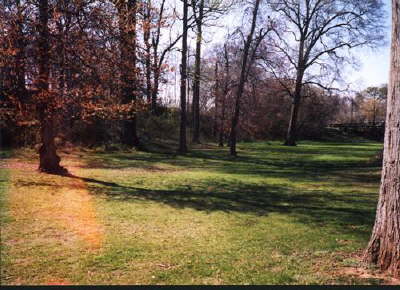
Dueling Grounds - Bladensburg, Maryland
"In the ravine just north of the Fort Lincoln Cemetery amidst a cluster of trees was the famous Bladensburg Dueling Ground where more than fifty duels were fought during the first half of the 19th century. On what became known as “The Dark and Bloody Grounds,” gentlemen of Washington, D.C., settled their political and personal differences."
image fromthe Town of Bladensburg @2010 All rights reserved 


[1] Biographical Directory of the United States Congress. 2013. [accessed March 21, 2013] http://bioguide.congress.gov/scripts/biodisplay.pl?index=P000168

PEARSON, Joseph, a Representative from North Carolina; born in Rowan County, N.C., in 1776; completed preparatory studies; studied law; was admitted to the bar and commenced practice in Salisbury, N.C.; member of the State house of commons; elected as a Federalist to the Eleventh, Twelfth, and Thirteenth Congresses (March 4, 1809-March 3, 1815); while in Congress fought a duel with John George Jackson, of Virginia, and on the second fire wounded his opponent in the hip; died in Salisbury, N.C., October 27, 1834.

[2] Biographical Directory of the United States Congress. 2013. [accessed March 21, 2013] http://bioguide.congress.gov/scripts/biodisplay.pl?index=J000021

JACKSON, John George, (son of George Jackson, brother of Edward Brake Jackson, and grandfather of William Thomas Bland), a Representative from Virginia; born in Buckhannon, Va. (now West Virginia), September 22, 1777; moved with his parents to Clarksburg in 1784; received an English training and became a civil engineer; appointed surveyor of public lands of what is now the State of Ohio in 1793; member of the Virginia house of delegates 1798-1801; elected as a Republican to the Eighth and to the three succeeding Congresses and served from March 4, 1803, to September 28, 1810, when he resigned; while in Congress fought a duel with Joseph Pearson, of North Carolina, and on the second fire was wounded in the hip; member of the State house of delegates in 1811 and 1812; brigadier general of Virginia Militia in 1812; elected as a Republican to the Thirteenth and Fourteenth Congresses (March 4, 1813-March 3, 1817); declined to be a candidate for reelection in 1816 to the Fifteenth Congress; appointed United States district judge for the western district of Virginia in 1819 and served until his death in Clarksburg, Va. (now West Virginia), March 28, 1825; interment in the Old Jackson Cemetery.

[3] Stephen W. Brown. 1985. Voice of the New West: John G. Jackson, His Life and Times. Mercer University Press.  pp. 85-92.

The Miranda Affair 1806 Invasion of Venezuela lay at the heart of the political attacks that resulted in the duel.

[4] The Courier; Date: 12-13-1809; Volume: XIV; Issue: 5; Page: [3]; Location: Norwich, Connecticut

WASHINGTON DECEMBER 5TH, 1809.  "THE DUEL. - Yesterday morning a duel took place at Bladensburg between Joseph Pierson, Esq. of North Caorlina,and John G. Jackson, of Virginia.  On the second fire Mr. Jackson received Mr. Pierson's shot in the thigh, and we are informed the wound id thought dangerous.  Mr. Pierson was not hurt." 

[5] Alexandria Burns Club. 2013. [accessed March 21, 2013] http://www.robertburns.org.uk/Assets/Poems_Songs/tamoshanter.htm

"Tam o' Shanter is a wonderful, epic poem in which Burns paints a vivid picture of the drinking classes in the old Scotch town of Ayr in the late 18th century. It is populated by several unforgettable characters including of course Tam himself, his bosom pal, Souter (Cobbler) Johnnie and his own long suffering wife Kate, "Gathering her brows like gathering storm, nursing her wrath to keep it warm". We are also introduced to Kirkton Jean, the ghostly, "winsome wench", Cutty Sark and let's not forget his gallant horse, Maggie. "

[6] Office of the Historian, Bureau of Public Affairs, United States Department of State. 2013. accessed March 21, 2013] http://history.state.gov/departmenthistory/people/smith-robert

Robert Smith served as Secretary of State under President James Madison from March 6, 1809 to April 1, 1811. Smith’s controversial appointment and clashes with Madison influenced his service as Secretary of State.

Wikipedia. 2013. [accessed March 21, 2013] http://en.wikipedia.org/wiki/Robert_Smith_(Cabinet_member)

Robert Smith (November 3, 1757 – November 26, 1842) was the second United States Secretary of the Navy from 1801 to 1809 and the sixth United States Secretary of State from 1809 to 1811. He was the brother of Senator Samuel Smith.

[7] The Providence Gazette.; Date: 12-16-1809; Volume: XLV; Issue: 2398; Page: [3]; Location: Providence, Rhode Island