Showing posts with label 1813. Show all posts

Wednesday, February 12, 2014

Imprisoned for Failure to Repay Debt in 1813 Maryland - John Ball of Prince George's County Petitions for Release from Prison

Maryland — Prince Georges [sic] county, to wit[1]
Application being made to me the subscriber, in the recess of Prince Georges county court, as an associate judge of the first judicial district of Maryland, by petition in writing of John Ball of Prince Georges county, praying for the benefit of the "Act for the relief of sundry insolvent debtors" and the supplements thereto, on the terms mentioned in the said acts, a schedule of his property and a list of his creditors on oath, as far as he can ascertain them being and next to his petition, and the said John Ball having satisfied me by competent testimony that he has resided in the state of Maryland two years immediately preceding the time of his application; having also satisfied me that he is now in confinement for debts, and praying to be discharged therefrom. I do therefore order and adjudge that the said John Ball be discharged from his imprisonment, and that by causing disorder to be inserted in the National Intelligencer, weekly for three months successfully before the first Monday in April next, give notice to his creditors to appear before Prince Georges county court on the first Monday in April next, to shew cause, if any they have, why the said John Ball should not have the benefit of the several acts as prayed. Given under my hand this sixth day of October 1812.
                                                            DANIEL CLARKE.
            January 1 ..w3m [2]


[1] Debt, failure to repay a loan, was a serious matter in Maryland during the colonial, revolutionary, and Antibeluum periods in Maryland. Failure to repay could and did result in imprisonment.  Any attempt to explain Maryland's confusing, complicated, complex, contradictory and inconsistent insolvency and bankruptcy laws is beyond the scope of a mere footnote. In a very real sense much of Maryland's political history is the tale of relations and resulting tensions between creditors and debtors. Those who lent and those who borrowed were at odds as to personal, social, ethical and moral responsibilities. When criminal fraud was layered upn economic inability to repay a loan, penalties and punishment quickly became entangled.

In the decades immediately following the founding of the English colony of Maryland by the Calvert family, the role of creditors was firmly established. Legislation was introduced as early as 1637 to address default on loans. A debtor could find his future labor indentured to his creditor or creditors. In other words he would become bound contractually to work off the debt. Almost at once, debtors asked for relief. For example if a debt was called in during the growing season and the debtor physically held so that he could not plant, cultivate and harvest his crop of tobacco, it then stood to reason he could in no way pay off his financial obligation to the creditor that had brought legal claim against him.

Conditions of imprisonment for debt could be extreme in Prince George's County as well as the rest of the State of Maryland. In 1731, the General Assembly order an investigation of debtor's prison conditions and the treatment of prisoners by the county sheriff, Richard Lee.  . On Friday July 23, 1731,
"Mr Ralph Crabb in Obedience to an Order made at last Sessions of Assembly Ordering him and Mr Edward Sprigg to repair to the Gaol of the Sherriff of Prince Georges County and to Examine the Prisoners Concerning their being beat & abused by the said Sherriff Return to the House the Depositions of Several prisoners by them taken with a Recognizance taken of the said Sherriff for to keep the peace & be of Good Behaviour.(Proceedings and Acts of the General Assembly, May, 1730-August, 1732. Volume 37, Page 237).
see also:  Volume 37, Page 118 "Whereas this House is Informed that Mr Richard Lee Sherrif of Prince Georges County hath during the Sitting of this Assembly beat and Abused Some Languishing Prisoners in his Custody and threatned others with Cruel and Severe Usage for Petitioning the Assembly for their Liberty and this House having taken the said Information into Consideration and being of Opinion that if the Same be true such Treatment is inhuman Cruel and a Violation of the Libertys of the Brittish Subject as also an Insult on and a Violent breach of the Priviledges of this House. It is Ordered and Resolved by this House that Mr Ralph Crabb and Mr Edward Sprigg Justices of the Peace of Prince Georges County and Members of this House Repair in some Convenient time to the Gaol of the said Sherrif And in his the said Sherrifs presence Examine' the prisoners and such other Persons as Can Inform them of the Truth of the Complaint made against the said Sherrif and return the Examinations to be by them taken to this House the next Session of Assembly in Order to be Considered, and if they find the facts Charged Against the said Sherrif to be true that they Cause him to Enter into Recognizance with Sufficient Suritys to be of good behaviour and to keep the peace in the Interim with all the good people of this Province Especially to the said prisoners."  

By the end of the Proprietary government and the establishment of the State of Maryland the contours of credit versus debt; Senate versus House of Delegates; specie (coins and precious metals) versus paper money;  Federalists versus Democratic-Republicans (Anti-Federalists or Jeffersonian Democrats); restrictive property requirements for voter qualifications versus universal enfranchisement for western European males; the Potomac Valley, Georgetown, and Bladensburg versus the Patuxent River planters, Baltimore merchants, and the Chesapeake watermen; - were shaping the political discourse and the history of Maryland.


[2]  Daily National Intelligencer; Date: 02-12-1813; Volume: I; Issue: 37; Page: [4]; Location: Washington (DC), District of Columbia.

Transcribed by John Peter Thompson, February 12th, 2014

Sunday, December 29, 2013

Death of Benjamin Stoddert of Bladensburgh, Maryland, reported in New York Evening Post, Dec. 27, 1813

From our correspondent,
Washington, Dec 22.

               You will perceive on reading the Message of the President recommending an Embargo, that embraces other subjects to which he calls the attention of Congress. These will in their season be for the deliberation of the National Legislature, and will very probably become features in the restrictive system which is to hang over this country like a deadly incubus. An important era in the history of the Senate is about to be developed, and let me inform you, it is here understood that Executive measures must prevail. Hence an Embargo with rigid provision has been enlisted, not in pursuance with the judgment of the Senate, but according to Executive requisition.

               The only circumstance that has happened in the neighbourhood [sic], worthy of remark, is the death of Mister Stoddert, the first secretary of the Navy. He was universally known in this country, and is universally esteemed a great and good man. He died at Bladensburgh [sic] on last Saturday morning. On the evening before he retired to rest in his usual health - at 12 o'clock he was seized with what is usually termed a cholic in the stomach, and died about 1 o'clock in the morning.[1]


[1] The Evening Post.; Date: 12-27-1813; Page: [2]; Location: New York, New York
Transcribed by John Peter Thompson December 29, 2013.

Saturday, December 14, 2013

US Immigration and Naturalization Policy Debate, Dec 1, 1813


FROM THE STANDARDS OF UNION.
______________

A POINT OF CONTROVERSY.

               It now behoves the United States to repeal their naturalization laws, or in a solemn manner to maintain their validity. While they remain on the statute book, and form a part of the law of the land, it would be disgraceful to submit to their violation. If they are just in point of principle, they ought to be defended. If wrong, they should be instantly revoked; and then, that subject of contention with Great Britain would be removed. It is very extraordinary circumstance, that England who accepts and courts the services of the subjects of other nations, should be so Stern in enforcing an opposite rule against them. An American or a Dane, serves two years in the British Navy, is thereby ipso facto, naturalized; but an Englishman regularly naturalized in the United States, if taken in their service, is liable to be hung.

               The question before us is a very important one. It possesses extensive relations in peace as well as in war. If naturalization is not valid, the natives of the British dominions cannot become American citizens, neither can they be entitled to hold ships, pursue trade, or perform any other act in that character.

               We hold the right of immigration to be a law inseparable from our nature, and as ancient as civilization itself. - That it was recognized by the Roman Republic, sufficiently appears by the Plotian law, and the celebrated orations of Cicero, pro Archias. Contrary doctrines, principally spraying, from the system of feudal vassalage and cannot be sanctioned by states, whose institutes are founded on the universal law of nature and of nations. This is a subject that deserves an able and accurate discussion.

               We are happy to see our government retaliate in a manner that will eventually ensure safety to the person of our naturalized fellow citizens and cause their rights to be respected. The principle must be settled by the maxims of justice, and not by the arrogant despotism of a British cabinet.


Headline: From the Standard of Union. A Point of Controversy; Article Type: News/Opinion
Paper: Baltimore Patriot, published as Baltimore Patriot & Evening Advertiser.; Date: 12-01-1813; Volume: 2; Issue: 125; Page: [2]; Location: Baltimore, Maryland


Sunday, July 28, 2013

Gunpowder for Sale near Bladensburg, Maryland - August 1813

GUN POWDER

               The subscribers offer for sale, at the Franklin Powder Mills, Near Bladensburg, and at the store of Stull & Williams, in Georgetown,

GUN POWDER
OF EVERY DESCRIPTION,

Warranted to be of superior quality.

               From the great expence [sic] and trouble which they have incurred to make their powder good, they flatter themselves that they will meet with encouragement. - Persons residing in the several counties in the adjacent states, who are in the habit of vending powder, can be supplied on the most liberal terms. - Orders from a distance will be punctually attended to, the powder carefully put up in tight casks, and forwarded without delay.

GRAYSON, STULLER & WILLIAMS

August 27 - 12t [1]

Federal Republican, August 30, 1813
This entire product and/or portions thereof are copyrighted by NewsBank and/or the American Antiquarian Society. 2004


[1] Federal Republican and Commercial Gazette.; Date: 08-30-1813; Volume: VII; Issue: 1013; Page: [3]; Location: Georgetown, District of Columbia.
Transcribed by John Peter Thompson, July 28th, 2013.

Sunday, June 9, 2013

A Valuable Mill in Bladensburg to be Leased - 1813

A VALUABLE MILL TO BE LEASED.

ON Thursday the 17th inst. will be offered to the highest bidder, on the premises, on a lease of ten or fifteen years (if not before leased by private bargain) for so much money paid down, or to be paid in one, two or three years, with interest, the Bladensburg Mill, with about 30 acres of ground attached to it.  The advantages of the situation, from its contiguity to a good grain country, from its being at the head of tide water, where boats may be loaded and unloaded, and from the command which it has of a most copious and unfailing spring of water, render the property highly valuable and make it a peculiar manner worth the attention of personas wishing to engage in the manufacturing business.  Application to be made to Daniel Brent, in the city of Washington, or to the subscriber, at Green Hill, Prince George's county.
                                                                                                         
                                                                                        Wm. DUDLEY DIGGES.
               June 4 [1]


[1] Daily National Intelligencer; Date: 06-09-1813; Volume: I; Issue: 137; Page: [1]; Location: Washington (DC), District of Columbia.
Transcribed by John Peter Thompson, June 9th, 2013.

Tuesday, April 30, 2013

Reward for Runaway Horse April 30, 1813


FIFTEEN DOLLARS REWARD.[1]

               Strayed away from the subscriber on the 15th inst. a dark bay HORSE, between 17 and 18 handshigh, 6 years old this spring, remarkable for very large hoofs.  He has been lately bled, and on the side he was bled there was a swelling on his shoulder occassioned by the collar.  He was raised in Washington county, Pennsylvania, and has no doubt taken the Frederic[ ] or Leesburg road.  Whoever will decline said Horse to the subscriber or his manager, Mr. Francis Clements, living near Bladensburg, shall be entitled to the above reward.

                              WILLIAM DUDLEY DIGGES
April 22 - 6T[2]


[1] One US DOLLAR 1813 = $11.236 in 2010.

[2] Daily National Intelligencer; Date: 04-30-1813; Volume: I; Issue: 103; Page: [1]; Location: Washington (DC), District of Columbia.
Transcriber by John Peter Thompson, April 19, 2013.

Monday, April 22, 2013

Fine Wines to be had near Bladensburg 200 years ago - April 1813


A ROSS,

As received this day, at his Wine Cellar, th follwing articled, imported in the schooner Express, lately from Bordeaux, which he will sell wholesale and retail for a moderate profit:

Sparkling C hampaigne [sic] in Hampers of             50 bottles
Medoc in baskets of                                             12  do.[1]
St. Julien Red Wine in hampers of                          24 do,
Vin de Grave in boxes of                                       12 do.
Claret               in   do.    of                                  12 do,
Sweet Oil in baskets of                                         12 do,
Prunes in boxes of about 1[6] lb. each[2]                                                     
Cognac Brandy in pipes, of very superior quality.
He has also received from Baltimore
Fresh Boushong [sic] Tea,
Pichou  do.            do.
Padfoy    do.            do.
Table Salt in baskets,
Mould Candles, &c.

Georgetown, March 9 - [indecipherable][3]


[1] do. = ditto
Tuscan dialectal ditto "(in) the said (month or year)," literary Italian detto, past participle of dire "to say," from Latin dicere (see diction). Originally used in Italian to avoid repetition of month names in a series of dates; generalized meaning of "same as above" first recorded in English 1670s. http://etymonline.com/?term=ditto
  
[2] second digit is hard to read could be 0, 5 or 6 (10,15 or16).
[3] Daily National Intelligencer; Date: 04-22-1813; Volume: I; Issue: 96; Page: [3]; Location: Washington (DC), District of Columbia.
Transcribed by Jophn Peter Thompson, April 22nd, 2013

Sunday, April 21, 2013

Somethings never change: An Act to restrain the use of Fire-Arms in the city of Washington - March 1813


AN ACT

To restrain the use of Fire-Arms in the city of Washington.

               Sec. 1.  Be it enacted by the Board of Aldermen and Board of Common Council of the City of Washington, That from and after the passage of this act, if any person shall fire or shoot a gun, pistol or other fire arms, idly for sport or amusement within two hundred and fifty yards of any dwelling house , in that part of this city contained within north M street, Massachusetts avenue, Seventh street east, Pennsylvania Avenue, the Eastern Branch, Sixth street west, Virginia avenue and Rock Creek; or in any part of the city on the sabbath, the persaon so firing or shooting, shall forfeit and pay a fine not exceeding ten dollars, nor less than five dollars, at the discretion of any justice of the peace resident within this city; one-half whereof shall be for the use of the city, and the other half shall be paid to the informer, or to the trustees of the poor of this corporation, in the case the informer declines accepting the same:  Provided, That nothing herein contained shall be construed to affect any officer of this corporation for firing or shooting as aforeaid, in the execution of his duty, or the militia or troops of the United States for discharging their fire arms on days of mustering, training or rejoicing, when ordered so to shoot or fire by their commnading officer; or any person shooting or firing as aforesaid in the performance of any philosphical experiment or theatrical amusement, for the exhibition of which a licence shall have been previously obtained.  And provided, That nothing in this act contained, shall be construed to prohibit any person from shooting at water fowls in the Eastern Branch, Potomac river or Tyber creek, although such person may be within the limits herein prescribed.

               Sec. 2.  And be it enacted, That if any minor, or apprentice or slave, shall be convicted of violating the provisions of this act, the parent or guardian of such minor, the master or mistress of such apprentice, or the owner or holder of such slave, as the case may be, shall forfeit and pay, as aforesaid, the fine or fines incurred by such minor, apprentice, or slave.

               Sec. 3.  And be it enacted, That the fourth section of an act, entitled "An act to suppress horse running and shooting in certain cases in the city of Washington," passed the ninth day of December, eighteen hundred and nine, be, and the same is hereby repealed.

TOPPAN WEBSTER, President
pro tempore, of the Board of Common Council

JAMES HOBAN, President
pro tem. of the Board of Aldermen.

Approved, March 30th, 1813.
DANl. RAPINE[1]


[1] Daily National Intelligencer; Date: 04-21-1813; Volume: I; Issue: 95; Page: [2]; Location: Washington (DC), District of Columbia.
Transcribed by John Peter Thompson, April 21st, 2013.

Saturday, April 20, 2013

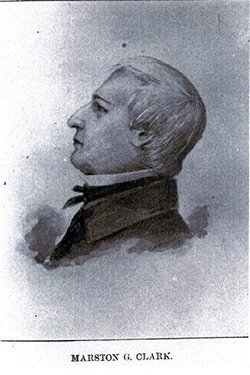
News from the Western Frontier - Indiana 1813: Report of Colonel Marston G. Clark


PENN.                                                                            Washington, April 12

               To the politeness of Colonel Marston G. Clark, we are indebted for the following information.[1]

               On Sunday the 21st inst. a party of Indians made an attack on the house of an old gentleman about twenty miles from the falls and eight miles from Charleston (I. T.) killed the odl man and wounded one of his daughters.[2]  Two gentlemen having rode up in the house, and having light, leaving their horses fastened to the fence, a few minutes before the attack, had their horses shot down and the saddles taken off by the Indians.  It is presumed the happy circumstance of the arrival of those gentlemen prevented the intended massacre of the whole family.  The following monring, at about two miles from whence the Indians commenced their attack, and committed the murdr on the old man; the same party shot a young man, several balls passing thro' his clothes - his horse was shot, but not so disabled as to prevent him making his escape - the horse is no doubt since dead.

               Col. Clark being in Charleston when the alarm was given (about mid-night) joined Major Davis Floyd, and Col. Bigger, with about 80 men; and at sun rise were on the fround where the mischief had been committed, at which place the Indians separated after foing the mischief staed above.  One party having taken a number of horses and made off; this party were pursued about twenty five or thirty miles, and came within gun shot just as they had crossed a large creek by rafting.  The Indians on discovering our approach took flight (leaving the horses and some trifling Indian trinkets,) which put it out of our power to get but a few fires at them as the creek was not fordable, and the raft on which they crossed was on the opposite shore.  A few of the party swam their horses across the creek with considerable difficulty and risk.  Finding the Indians could not be trailed as they were then on foot, further pursuit was declinded.  the party returned and have up the horses to the persons from whom they had been stolen.

               When the party left the house where the mischief had been done, a boy was missing, and it was not then ascertained whether he had been killed or taken prisoner.

               Col. Clark further states, as he passed trhrough Charleston, on his return home, on Tuesday last, capt. Baggs was out with a party in pursuit of that part of the Indians who remained in the settlement - their success not known.[3]


[1] Gen Marston Green Clark. [accessed April 20, 2013] http://www.findagrave.com/cgi-bin/fg.cgi?page=gr&GRid=66485996

Obituary in The American Almanac and Repository of Useful Knowledge 1846

"July 25. — In Indiana, Gen. Marston G. Clark, aged 74. He was born in Lunenburgh County, Virginia, on the 12th of December, 1771, and was one of a family of twenty-nine brothers and two sisters, by the same father and mother. Before he was 21 years of age, he left his native state, and went to the West, then a wilderness. Gen. Clark shared much of the confidence and esteem of his fellow-citizens, having filled, with honor to himself and profit to his country many stations, both civil and military. He served in the campaigns of Gen. Wayne as a private soldier; and was aid to Gen. Harrison at the sanguinary battle of Tippecanoe. As Indian agent also, Gen. Clark served with much advantage, and was repeatedly a member of both branches of the legislature of Indiana."

"A prominent man among the early settlers of Clark County; had been a member of the first court organized in that county in 1801; had been one of the commissioners appointed to lay off the town of Jeffersonville; was now (1816) a citizen of Washington county, residing about eight miles south of the town of Salem, the countyseat." Biographical and Historical Souvenir for the Counties of Clark, Crawford, Harrison, Floyd, Jefferson, Jennings, Scott, and Washington, Indiana" (printed 1889)

[2] Charleston, Indiana Territory

[3] Baltimore Patriot; Date: 04-20-1813; Volume: I; Issue: 93; Page: [2]; Location: Baltimore, Maryland.
Transcribed by John Peter Thompson, April 20th, 2013.

Wednesday, April 17, 2013

News of the British fleet in the Chesapeake - April 15, 1813


POSTSCRIPT.
----------
THE ENEMY'S FLEET.
                                                                                                         Baltimore, April 15.    

               Capt. Crandle left west river yesterday, when he got into the bay he found the seven close after, and as they out sailed him he had to use his sweeps, when off Magothy river or a little above, the British were off Annapolis.  He passed the Bodkin (mouth of the Patapsco) about 8 o'clock in the evening.  The last he saw of the British, they were under sail; so it was uncertain to him whether they intended come off Annapolis, or proceed higher up the bay. - Gazette.[1]


[1] Daily National Intelligencer; Date: 04-17-1813; Volume: I; Issue: 92; Page: [3]; Location: Washington (DC), District of Columbia.
Transcribed by John Peter Thompson, April 17th, 2013.


Saturday, April 6, 2013

Steam Boat for Sale - Washington, DC - 1813


STEAM BOAT FOR SALE.
The Columbian Steam Boat, laying at Tyber creek Wharf, will be sold on Friday the 9th last at 11 o'clock, at auction for the benefit of all concerned, the debts of the said Comapny being first discharged.  She is about 48 tons burthen, flat bottom, drawing a small draft of water, which will make it an object for those engaged in the traffic in wood or grain to purchase her.  The terms will me made known on the day of sale.  By order of the Managers,           
                                             H. HESTOR, Treasurer.[1]
               April 3 -


[1] Daily National Intelligencer; Date: 04-06-1813; Volume: I; Issue: 82; Page: [1]
Transcribed by John Peter Thompson April 6th, 2013.

Friday, April 5, 2013

Pickled Walnuts, and Walnut Catsup. Maryland in 1813 - The Land of Pleasant Living


Pickled Walnuts, and Walnut Catsup.
For sale by the subscriber, a quantity of PICKLED WALNUTS, 2 years old, in jars of various sizes
ALSO
               WALNUT CATSUP, spiced om the most approved manner, for Rock Fish and Beef Steakes.[1]                                                            WILLIAM J. ALLOCK,

               march 30                         2aw4t Howard-street.[2]


[1] The White House Cookbook (1887). Vintage recipes website. 2012. [accessed April 5, 2013] http://www.vintagerecipes.net/books/whitehouse/walnut_catsup.php

Ingredients

100 walnuts
6 ounces of shallots
1 head of garlic
1/2 pound of salt
2 quarts of vinegar
2 ounces of anchovies
2 ounces of pepper
1/4 ounce of mace
1/2 ounce of cloves
Instructions

Beat in a large mortar green walnuts until they are thoroughly broken; then put them into a jar with shallots cut into pieces, garlic, vinegar and salt; let them stand for a fortnight, stirring them twice a day. Strain off the liquor, put into a stewpan with the anchovies, whole pepper, cloves and mace; boil it half an hour, skimming it well. Strain it off, and, when cold, pour it clear from any sediment into small bottles, cork it down closely and store it in a dry place. The sediment can be used for flavoring sauces.

Image from: Catsup…or is it Ketchup?


[2] Baltimore Patriot; Date: 04-05-1813. Page: [1].
Transcribed April 5, 2013 by John Peter Thompson

Monday, April 1, 2013

Vegetable Garden Seeds for Sale - 1813


DAVID OTT & CO.

In addition to their former supply of
GARDEN SEEDS,
have received the following which they
warrant of good quality, viz.

Early York Cabbage
Early [B]auliflowers,[1]
Late      do[2]
Early Sugar Load,
Large Battersea,
Red Dutch,
                                                     Radishes
Early Scarlet, Salmon, Purple, and Mixed
                                        Carrots
               Orange, Purple, Blood Red.
                              Lettuce Seed
Leaf Lettuce,                  Grand Admiral,
Cabage Lettuce               Dutch Lettuce,
Musk Melon,
Nutmeg  do.
Cluster Cucumber,
Bush Squash,
Leek Seed

And as usual, Drugs and Medicines, wholesale
and retail.

Pennsylvania avenue, Washington.
April 1-st[3]


[1] Perhaps: Cauliflower

[2] ditto  1620s, Tuscan dialectal ditto "(in) the said (month or year)," literary Italian detto, past participle of dire "to say," from Latin dicere. © 2001-2012 Douglas Harper, On Line Etymology.

[3] Daily National Intelligencer; Date: 04-01-1813; Volume: I; Issue: 78; Page: [3]; Location: Washington (DC).
Transcribed by John Peter Thompson April1, 2013.

Wednesday, March 27, 2013

News from nearby Virginia - March 27, 1813


SLAVES

On MONDAY. the fifth of April next, if fair; if not, the next da fair day; will be offered for sale, at the Tavern of Captain George Williams,[1] in this place, for ready money - FIFTY SLAVES - belonging to the estate of John Gibson,deceased; consisting of men, women and children.'

                              JOHN SPENCE,
                              JAMES REID,

               Executors of John Gibson.

Dumfires, March 4.[2]


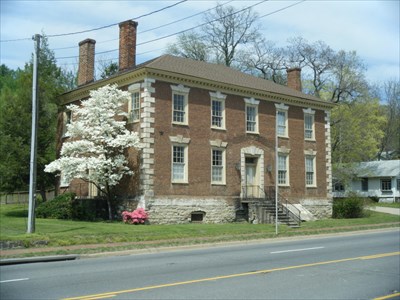
Williams Ordinary, Colonial Dumfries, VA


[1]Waymarking.com Williams Ordinary, Colonial Dumfries, VA [Accessed March 27, 2013] http://www.waymarking.com/waymarks/WMB9AY_Williams_Ordinary_Colonial_Dumfries_VA
 "Williams Ordinary is believed to have been built in the 1760s, although the exact construction date is unknown. The building's symmetrical facade features header bond, a brick pattern rarely found in Virginia. This building was one of the most prominent structures in colonial Dumfries and reflected the port town’s importance and wealth. While the building is known as Williams Ordinary, records are unclear as to whether local tavern keeper George Williams occupied the structure during the 1700s. The building’s name has changed to indicate various owners or uses. It has been called Love’s Hotel, Old Love’s Tavern, the Brick Tavern and the Stagecoach Inn. Research is ongoing.”
Colonial Dumfries
“Founded in 1749 by Scottish merchants, Dumfries’ port rivaled those of Boston and New York. Dumfries became the Prince William county seat in 1759. Sailors, slaves, merchants and members of the influential Lee, Fairfax, Mason and Washington families frequented the town. By 1763, falling tobacco exports and silt clogging the port began Dumfries slow economic decline.”
What’s an Ordinary?
“The term "ordinary" was common in Europe and early America. These establishments provided travelers with an ordinary meal and sleeping space. Such places were also called taverns and Inns. Ordinaries were the social centers of a community where patrons met and exchanged news. Many taverns operated in Dumfries, but those operating in this building were likely among the finest.”
Text taken from sign.
[2] Alexandria Daily Gazette, Commercial & Political; Date: 03-27-1813; Volume: XIII; Issue: 3912; Page: [1]; Location: Alexandria, Virginia

Tuesday, March 26, 2013

"Contrast " 1813 Politics of the Moment

The article from 1813 is entitled simply:


Contrast.

                While the good people of Boston are not only reposing in perfect security from the dangers and alarms of war, but actually celebrating the victories of the allies of Britain in Europe, the citizens of Norfolk, closely blockaded by the British, are momently [sic] expecting an attack with Congreve rockets, and preparing to defend their property and firesides against the enemy, and the inhabitants of Kentucky and Ohio are lamenting their friends and relatives, scalped, tomahawked and burnt, by the British allies at the river Raisin.


               Was this so in 1775?  Did the people of Virginia, in cold blooded malignant indifferent, quietly witness the sufferings of the citizens of Boston, Concord and Lexington?  Or are we now bound together by no ties of sympathy, interest or social compact as a people?  In 1775, Virginia was the first to make the cause of Massachusetts her own calamity, and cherish the idea of an African insurrection!  What changelings has mercantile cupidity made of men who called themselves patriots!  New-York too has been bleeding at every pore, and losing hundreds of her most useful citizens; while Connecticut, with less honor and good faith than a member of the confederation of the Rhine, or a chief of a tribe of Cossacs [sic] or Cherokees, has refused to furnish a single man to aid the common cause!

               What is the force of our constitution, our Congress and their laws?  Is the federal compact a rope of sand, more feeble than the old confederation!  And shall the people be compelled so to alter and strengthen the constitution as to enforce the execution of legal requisitions upon refractory states?  What is to be the result or remedy of this unnatural and detestable state of things?[1]   Colum.


[1]  Daily National Intelligencer; Date: 03-27-1813; Volume: I; Issue: 74; Page: [2].

Wednesday, March 20, 2013

ST PATRICK'S DAY - Washington DC celebrates in 1813

a report from a local newspaper on March 20, 1813 about z celebration in the city of Washington, a mere hour or so from Baldensburg by fast coach

ST PATRICK'S DAY 1813[1]

               A number of the Sons of Erin assembled at the house of Mr. Moss, near the Navy Yard to celevrate the festival of their Patron Saint; when Mr. Patrick Kain was called to the Chair, and after partaking of an entertainment, the following toasts were drank:

               The day we celebrate - Many happy returns os it to the Sons and Daughters of St. Patrick.  _ Music of St. Patrick's Day.

               The United States of America - an asylum for the oppressed - The true Sons of Erin will ever be foremost in supporting the rights and avenging the wrongs of their adopted country.

               The Army of the United States - May their past misfortunes prove to be only the prelude to future success.

               The Navy - It has in glorious victories gained by Hull, Decatur, Jones and Bainbridge, proved to the world that "Fir" is superior to English Oak.

               The Republicans of South America - Engaged in a good cause; may their efforts be crowned by success.

               The Band of Irish Martyrs - Orr, Tone, Fitzgerald, Emmett, and Co.  Sad but sweet the memory of departed worth.

               The memory of James Napper Tandy - Brtain can sacrifice her unnatural maxim at non-expatriation on the altar of necessity.[2]

               Ireland - Fallen alas is its state, degraded its condition! such are the effects of national disunion and religious discord - let Americans learn wisdom from so awful an example.

               The History of Ireland - The record of English crimes, of English oppression and English avarice.

               Our Countrymen of the Old Sod - May they extirpate the spirit of animosity from among them and cultivate that love of union which alone can effect their political salvation.

               Columbia the land of our choice, because it is the land of Liberty - Dear to us is that freedom we participate in, and for its preservation Irishmen will cheerfully risque their all.

               The President and Constituted authorities of the United States - The Magistrates and Legislators of a free peopple resolved to preserve their rights.

               The Ocean - Impious is the thought that a few proud Islanders shall monopolize the world's domain. 

               George Washington - His advice is good, his example better - may the former be ever cherished, the latter followed.

               Thomas Jefferson - A virtuous chief, whose services cannot, will not be forgotten by a grateful people.

               Hospitality - May Irishmen in America be ever willing to impart its rights to the helpless stranger.

               Our Countrymen throughout the United States - Experiencing the blessings of Freedom, it would be unatural [sic] to find them among our enemies.

               The Fair Columbia - May their favors be conferred on the friends of their country to the total exclusion of tories.[3]


[1] Daily National Intelligencer; Date: 03-20-1813; Volume: I; Issue: 68; Page: [3]; Location: Washington (DC), District of Columbia

[3] Frank Moore. 1876. The Diary of the Revolution: A Centennial Volume Embracing the Current Events in Our Country's History from 1775 to 1781 as Described by American, British, and Tory Cotemporaries; Compiled from the Journals, Documents, Private Records Correspondence, Etc., of that Period Forming an Interesting, Impartial, and Valuable Collection of Revolutionary Literature. J. Burr.

 A toast given in celebration of the Surrender of General Burgoyne's Armny at Saratoga, ew York in the Revolutionary War.

"May freedom peace and happiness be established in America extend throughout the world: -

While scenes of transport every breast inspire,
The muse too triumphs in her kindling fire;
Blest in this bliss she lifts a bolder wing,
Aids every wish and tunes the harp to sing,  
To their glad concert wakes the accordant strain,
And mingles with the music of the plain.  
                              "Joy to the bands!" her voice arose,  
                                             Who charmed that veteran host of foes;
                                                            Who bade Britain's glory fade,
               And placed the wreath on fair Columbia's head.            
Hail the day and mark it well,
When the scourge of freedom fell,
When your dawning glory shone;
Mark it freemen tis your own.

Now recount your toils with pleasure,
View the strife and sum the treasure,
Run the battles o'er again,
Sound the charge and sweep the plain.
Here behold the foe pursuing,
                              How he drives his headlong way,
               Whelming towns and realms in ruin,
                              Sure to seize the distant prey.

               Fear and faithless as tribes adore him,
                              Join the shout and yield him room;
               Now Albania fall before him,
                              Now rebellion learn your doom;
But dread Bemis to the skies
Bade the opposing stand and rise,
And arms dispute the day,
On that proud height
You dared the fight,
Till welcome night
Concealed their flight,
               And swept the war away.
Hail the day and mark it well,
When the scourge of freedom fell,
When your dawning glory shone;
Mark it freemen 'tis your own.
Again the well known hill they try,
Again they fall, again they fly,
               Again you sweep the field,
               Till thundering batteries cease to roar,
               They give the fancied conquest o'er,
                              And trembling thousands yield,
                                             Hail the day and mark it well,
Then the pride of Britain fell,
Then your dawning glory shone;
Mark it heroes tis your own.

               And soon the rival day shall shine,
               The task great Washington be thine,
                              To give it equal fame;
               Another vaunting host to thee,
               Now swell their pride now bend the knee,
                              To crown thy finish'd name.
               Then every glad blessing thy country shall lend
                              When her foes and her slaughter shall cease,
               Shall arise to the hero who bade her ascend
                              To conquest to glory and peace.  New York Packet October 25, n.d."